
+(0)800-80808800 welcome@konfliktmanagement1923.com
Conflict Management · since 1923

Conflicts cannot be resolved.

At least not in the way we have long assumed.

Our Approach
Conflict Management Dr. Zeuner 1923
What it is really about today

Not primarily about solutions

Conflicts no longer unfold merely along interests. They unfold along realities.

The assumption that conflicts can fundamentally be resolved falls short.

What was once negotiable is often no longer even jointly describable. Perception becomes a factor of power. Communication itself becomes a field of conflict. Trust becomes a scarce resource.

Under these conditions, traditional approaches are of limited use.

Our work begins where these conditions are no longer given.

Not primarily about solutions. But about three questions:

  • Is mutual understanding still possible?
  • How can a system remain capable of acting under pressure?
  • And how can tensions be shaped in a way that prevents escalation?

This is where our work begins.

What we work on

On the conditions of conflict

We work on the conditions of conflict — not only on its symptoms.

This means, for example:
  • designing communication spaces in which dialogue becomes possible again
  • clarifying decision-making processes before conflicts escalate further
  • stabilising structures in which positions have already hardened
Conflict Work

What we offer

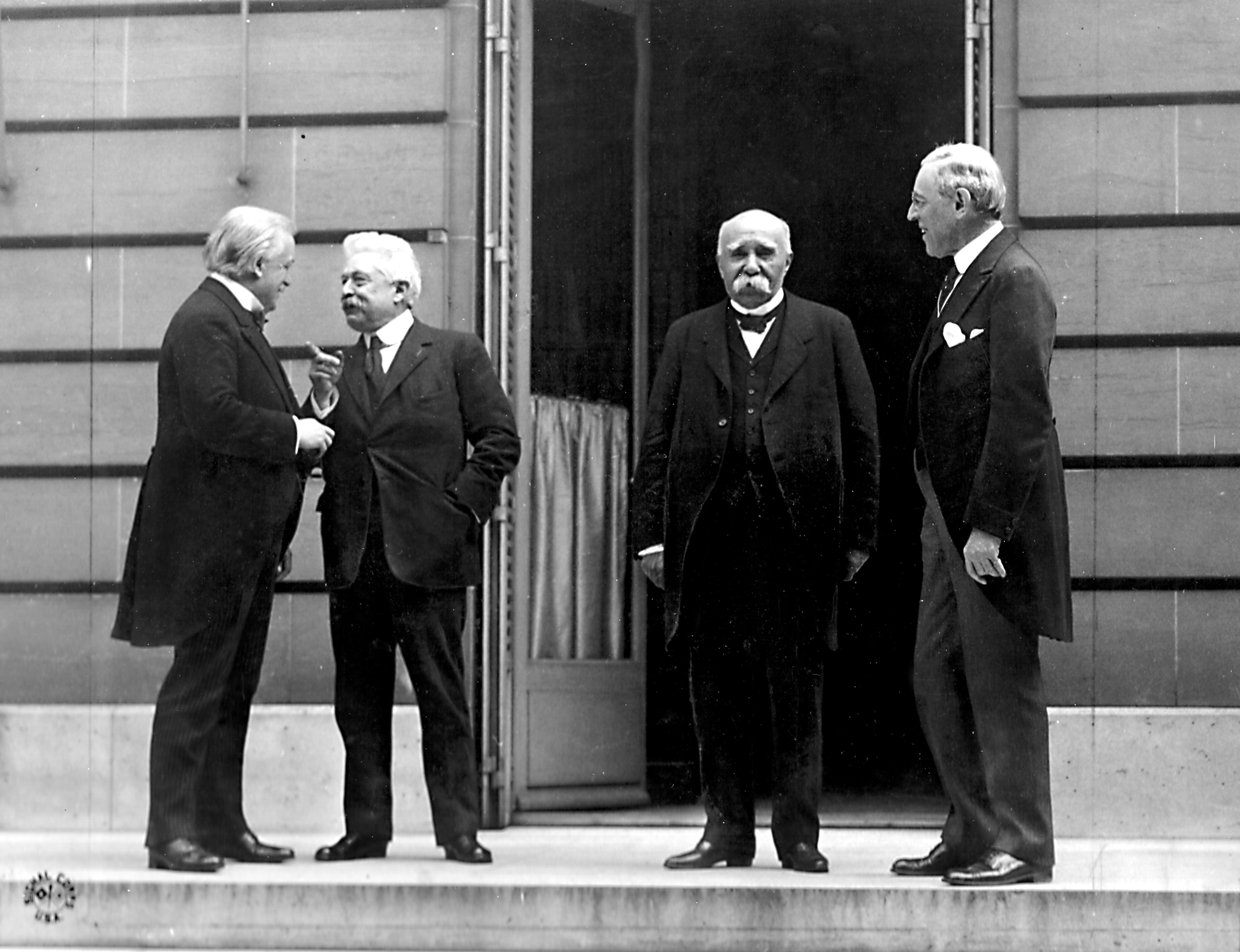
Lloyd George, Orlando, Clemenceau and Wilson at the Paris Peace Conference, 27 May 1919
Lloyd George, Orlando, Clemenceau and Wilson at the Paris Peace Conference, 27 May 1919 — the "Big Four" of the victorious powers negotiated a post-war order at Versailles that would itself become a source of further conflict. A reminder that peace settlements require more than terms imposed by a few. Source: Edward N. Jackson / U.S. Army Signal Corps / Public Domain
Contexts in which we operate

The contexts in which we work

  • political and societal tensions
  • organisations under high decision pressure
  • situations in which communication has lost its stabilising function
How we work

Working method

  • discreetly
  • situationally
  • without standardised procedures

Our work is based on:

  • strategic thinking
  • analytical depth
  • personal credibility

Because trust is not created by methods. But by people.

Who carries out this work

Experience in complex contexts

Our work is carried out by individuals with experience in complex decision-making and conflict environments.

  • leadership experience in politics, public administration and business
  • expertise in strategy, security and international affairs
  • legal competence in highly complex negotiation and conflict situations
  • experience in mediation, facilitation and systemic organisational development
  • interdisciplinary perspectives from social sciences, culture and communication

What connects these profiles is not a uniform career path. But a shared capability: to understand, assess and responsibly engage with complex conflict situations.

Our work takes place in real decision-making and conflict environments.
  • where time is limited
  • where interests collide
  • and where decisions have immediate consequences
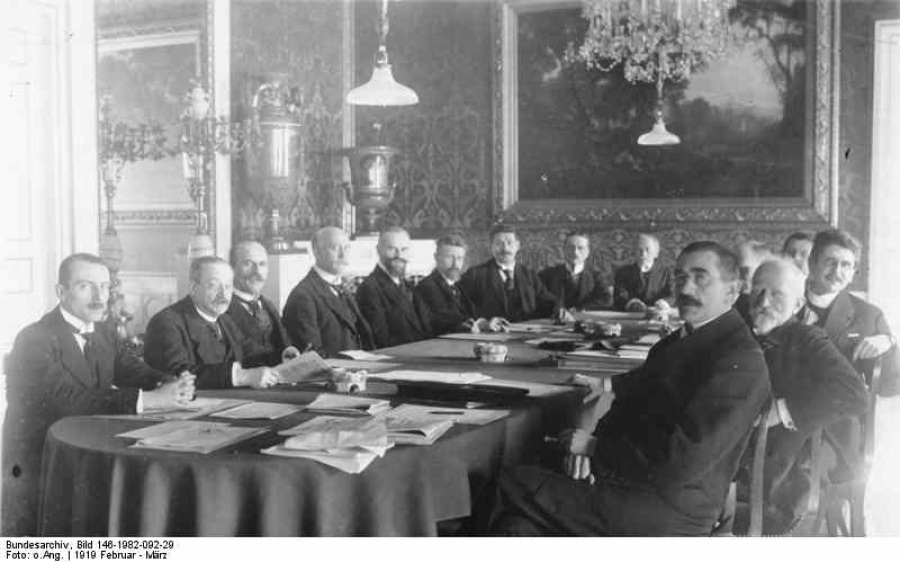
The Scheidemann Cabinet, first government of the Weimar Republic, 1919
Scheidemann Cabinet, 1919 — the first democratically elected government of the Weimar Republic, formed under the pressure of revolution, the Versailles peace negotiations and deep social division. A constellation in which political understanding had to be shaped under extreme strain. Source: Bundesarchiv, Bild 146-1982-092-29 / CC BY-SA 3.0 DE
What distinguishes us

No standard procedure

We do not work with standardised solutions, because standardised solutions fail where situations are not standardised. We operate in contexts where conventional approaches reach their limits.

And we make a clear distinction between:

  • situations that can be resolved
  • and those that must first be stabilised
For whom this is relevant

Bearing responsibility

Our work is relevant for those who carry responsibility when:

  • conflicts escalate
  • organisations become blocked
  • mutual understanding becomes unlikely
The decisive point

Conflicts are not the problem.

The problem arises when systems lose their ability to deal with them.

When understanding becomes difficult, our work begins.

Since 1923

A Reference

1923 stands not only for a year. But for an experience: that conflicts can be shaped under extreme pressure – when judgement, strategic action and responsibility come together.

1923 – A Reference →