Case Study
Since the Six-Day War of 1967, Egypt and Israel had existed in a state of open hostility. The memory of the Yom Kippur War of 1973 was fresh, relations were shattered, trust non-existent. Both sides had locked themselves for decades into a politically symbolic narrative of absolute adversary. Mediation was considered nearly impossible.
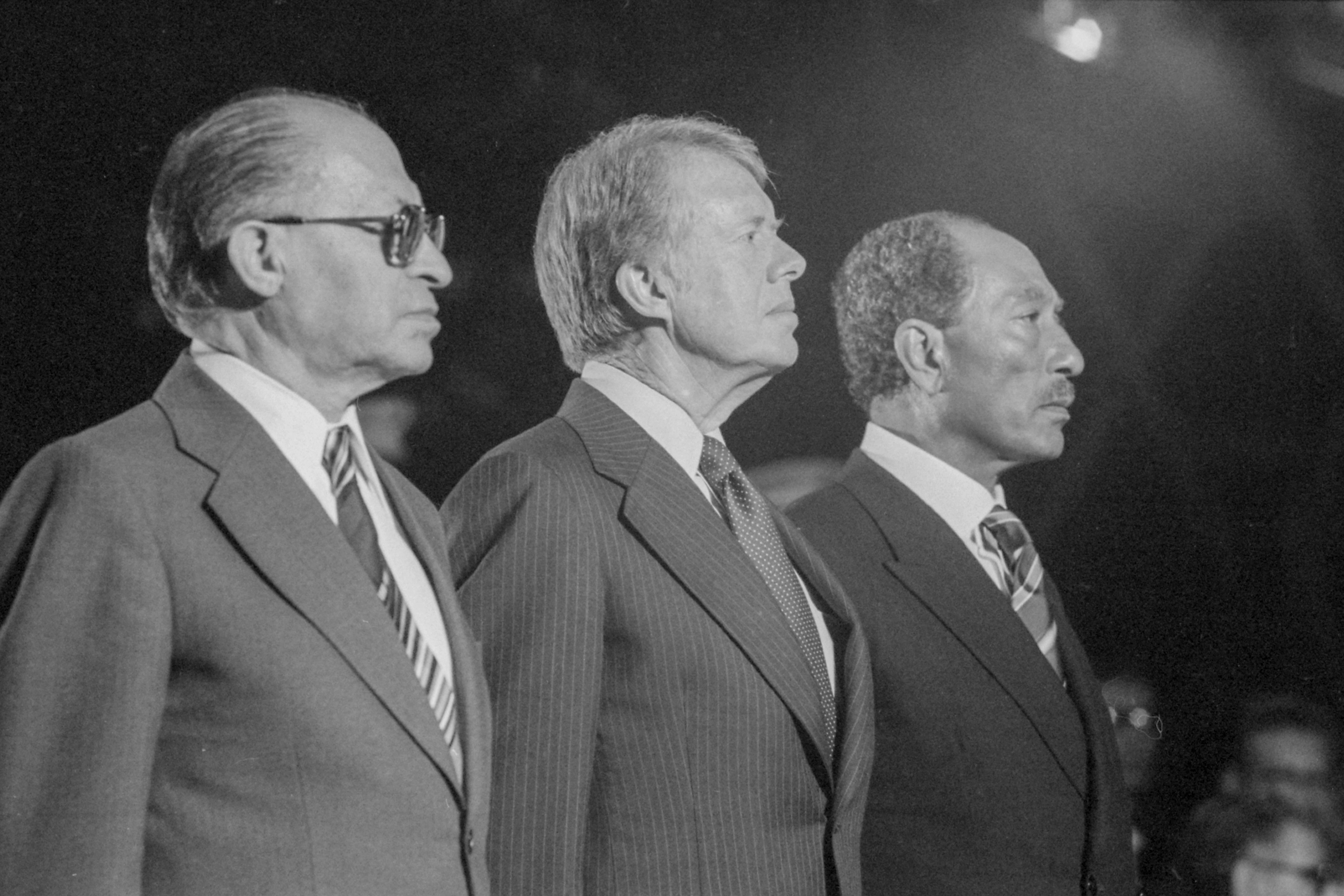
And yet, in September 1978, one of the most remarkable peace agreements of the 20th century came about: the Camp David Accords. Brokered by US President Jimmy Carter, between Egyptian President Anwar Sadat and Israeli Prime Minister Menachem Begin.
Key Lessons from Camp David
Carter – as mediator – was not a typical power politician, but a man of moral stance, religious seriousness and personal integrity. His authority did not derive from formal power, but from credibility – he was perceived as honest, patient, passionate. He did not bring a standardised negotiation method, but: the willingness to accept personal risk, a deep understanding of the cultural sensitivities of both sides, and an almost pastoral understanding of mediation: patience, listening, presence.
Lesson: Systemic power is not enough – mediation requires personal authority.
Withdrawal as method
Camp David was not simply a location, but a political setting: a shielded space, without media, without ceremonial obligation, without time pressure. It was a deliberate break with the UN-mediated, ritualised, publicly staged negotiations.
Carter understood: these conflict parties do not need a stage – they need distance from the world audience in order to reconsider their own positions.
Lesson: Discretion is not a weakness, but a prerequisite for understanding.
Narrative shift through personal encounter
Sadat and Begin were symbolic antipodes – military leaders, nationalists, men with deep enemy images. And yet Carter recognised that it was not about political detail, but about creating a symbolic threshold: a first signature, a first handshake, a first symbolic step that could not be undone. Carter worked with letters, metaphors, biographical references – he reminded Begin of his daughter, invoked his own faith, spoke in biblical imagery. It was not calculation – it was cultural empathy.
Lesson: The key to strategy often lies in the symbolic, not the contractual.
The result assessed with perspective
A peace treaty between Israel and Egypt – still valid today. Israel's withdrawal from the Sinai. Egypt's recognition of Israel – a geopolitical taboo-break.
But also: Sadat was assassinated three years later. The Palestinian conflict remained unresolved. Carter lost domestic support.
Conclusion: It was not a total success – but a historic breakthrough. And evidence that strategic conflict resolution through credible mediation is possible – when one is willing to place responsibility above procedure.
Not procedures are decisive, but the architecture of the conversation. Not neutrality, but integrity creates trust. Not the perfect solution is the goal, but the irreversible first step. Not system logic, but symbolic thinking is the key.
Cultivating the Camp David mentality: withdrawal, closeness, patience, biographical work. Investing in personalities, not formats. Understanding the symbolic language of conflict – it is often more powerful than legal detail.
